Monday, August 1, 2011

There’s another department here at the Museum of the Great Plains that investigates even older Oklahoma history, going back to the pre-Columbian era and prehistory. At the Museum we have our own resident archaeologist, Debra Baker. With the help of some volunteers, she is responsible for maintaining, cataloging and analyzing the archaeological collections. And from time to time she does get to put on her Indiana Jones’ hat and go dig for bones. This week I had the opportunity to sit with Debra and learn more about her work.

Debra states that Oklahoma’s history is more varied than most people think. Many different archeological finds have been discovered in Oklahoma. Mammoth bones discovered in Domebo Canyon show evidence of human activity, confirming the early Oklahomans hunted the mammoth. Archaeologists also discovered 11,000 year-old ‘Clovis points’, stone blades made by the Clovis people, at the Domebo site. This state is also rich with mammoth fossils. Other mammoth bones discovered at Cooperton were found alongside crude stone tools that were radio-carbon dated to be 17,000-21,000 years old. Currently, Debra Baker is working with Cameron University’s biological science team, headed by Dr. Mike Dunn, on the Grandfield excavation site. Though mammoth remains were discovered in 2005, excavation did not formally begin until 2009. Most of the bones have been unearthed and several can currently be seen on display here at the Museum.

Though many of the bones from the Grandfield site have been removed, some bones still remain in the ground. Debra explains that this is common practice; some fossils are just too fragile to remove from the ground. The Grandfield site is still active, but now scientists are working to conserve and protect the area for future exploration. In previous decades, the emphasis in archaeology was in digging up as many bones as possible but recently this practice has changed. Now the focus is on preserving and recording discoveries for future research. In fact, Debra states that she spends only about 10% of her time in the field, and for the other 90% she is engaged in lab work back at the museum.

Debra’s next big project won’t be out in the field; it will be right here in the museum’s existing collection. Since they were so focused on unearthing as many objects as possible, previous generations of archaeologists were rather sloppy when it came to cataloging and preserving their finds. For instance, many artifacts were simply thrown into cardboard boxes with little or no organization or labeling. Not only is this confusing, but it turns out that the cardboard boxes were acidic and are slowly damaging the bones. Now archaeologists like Debra are very careful about how they store bones and other artifacts; only acid-free materials are used and every object is thoroughly labeled and recorded. Debra showed me a mammoth tusk that had been unearthed several decades ago and was wrapped in plaster. Wrapping bones in plaster is no longer standard practice, she explains, because it can be very difficult to remove the plaster without damaging the bone. Unfortunately, this tusk will probably remain encased in plaster.

I asked Debra how she became interested in archaeology. She said that when she was a child, her family traveled all over the world, including Jordan, Israel and Egypt. Traveling to some of the oldest cities on Earth piqued her interest in history; when Debra went to college, she majored in anthropology and archaeology. Her job here at the Museum allows her to share her love of history with other people. The archaeology department at the Museum plays a vital role in conducting outreach and educating the public. There are only about 40 professional archaeologists in the state of Oklahoma and so they often rely on members of the public to find sites and artifacts. So it's important for people to know that they should not disturb any bones or other objects they might discover for preservation purposes. Exhibits and events at the museum help to educate people how they can preserve and protect our rich archeological history.

Interested in learning more about archaeology in Oklahoma? The Oklahoma Anthropological Society (OAS) provides a great opportunity for those interested in anthropology and archaeology to come together and share ideas, discoveries and to participate in preserving Oklahoma’s history; families and people of all ages have fun and connect through their shared interest in history. The OAS Greater Southwest Oklahoma chapter holds meetings on the 4th Saturday of each month at the Museum of the Great Plains.To inquire about membership dues and forms, contact Debra Baker at:baker1994@sbcglobal.net

More information about the history of Oklahoma’s archaeological sites can be found in the 2010-2011 Great Plains Journal, vol. 46

Friday, July 15, 2011

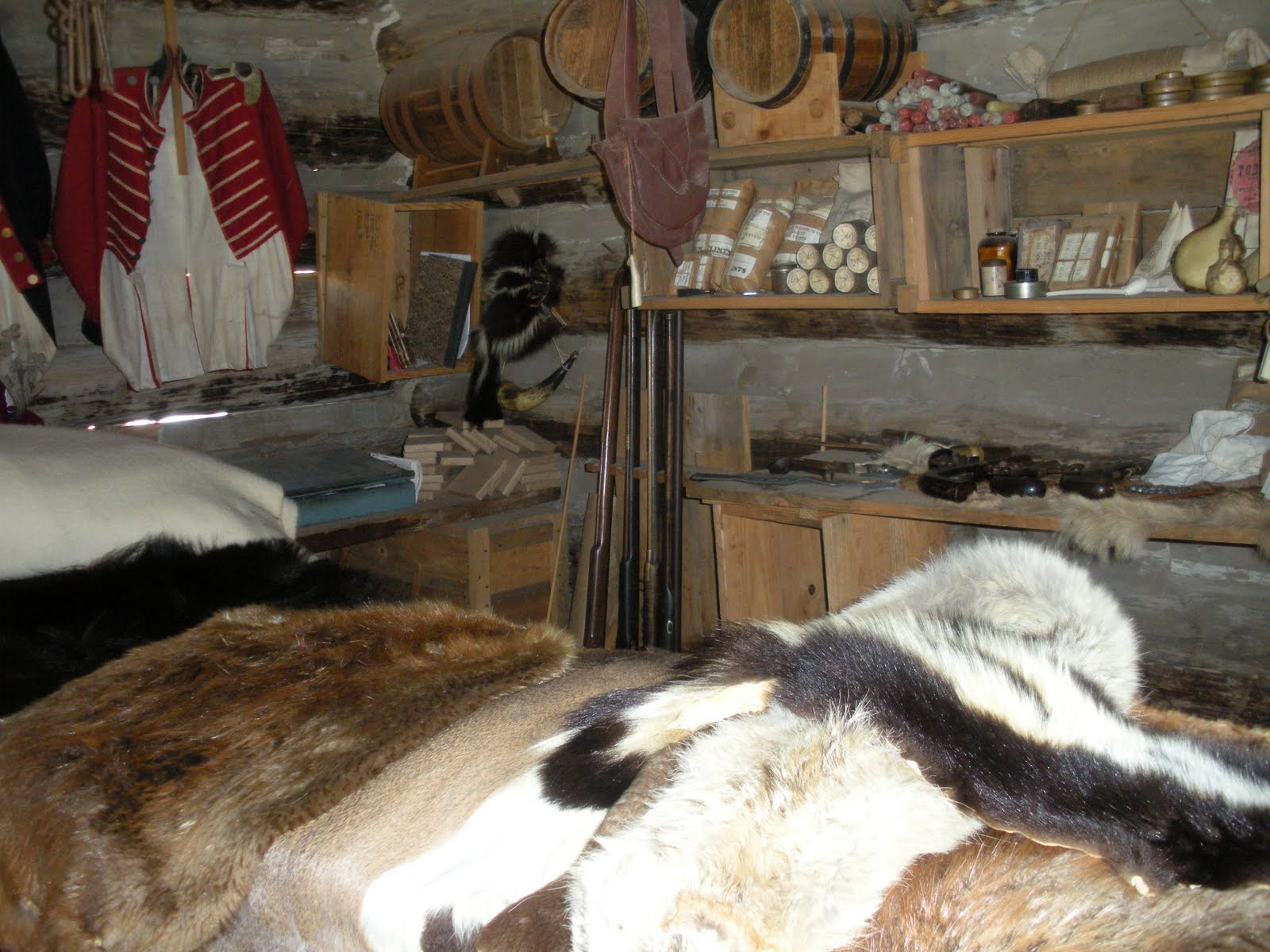
Another unique exhibit here at the Musuem of the Great Plains is the Red River Trading Post. Located on the museum grounds, the trading post is a historically accurate replica of a fur trading post that operated near Cache creek in the 1830’s and 40s. Tim Poteete, the museum’s Lead Historical Interpreter, is in charge of running the Red River Trading Post and educating visitors about the history of the fur trade in Oklahoma. Last Friday, I spent the morning at the trading post, talking with Tim and three volunteers, Al Hobbs, Steve Strickire and Len McCue, to learn more about the fur trade and to observe how the trading post serves as a tool to teach visitors about local history.


History of the Trading Post

The Red River Trading Post is one of the few places west of the Mississippi that showcases the history of the Western fur trade. Established in 1836, the post served as a meeting place, dry goods store and as a hub for the fur trade in Indian Territory. Two men named Coffee and Coville owned the post; goods such as tea, guns and beads were shipped up river to Ft. Smith, Arkansas and then loaded onto a mule for the last stretch to the trading post. During the 1830’s and 40’s beaver was the most prized fur, with Buffalo hide coming in second. This dynamic began to change with the introduction of silk worms from China around 1834. Now hats and other fine clothing were made with silk, not beaver fur, and buffalo hide became the most important fur for the Great Plains. I asked each of the historical interpreters how they came to be interested in the fur trade in general and in the history of the Red River Trading Post in particular. Tim recalls that he has always been interested in history. He grew up in eastern Oklahoma and at 35 years old went to school to get a Master’s degree in history. A friend introduced Tim to someone working at the Museum of the Great Plains and for the next few years Tim volunteered at the trading post in his spare time. When the position of Lead Historical Interpreter opened up in 1999, Tim applied and has been working at the museum ever since. Len McCue grew up in New England and has also been interested in history most of his life. When he moved out to Oklahoma, he became more interested in Western history, particularly pre-Civil War Western history. Leo says that what he finds most interesting about the pre-Civil War era is that it was a period when settlers and Indians mostly got along and both benefited from the lucrative fur trade.


The Red River Trading Post is a valuable educational tool for teaching people about the Oklahoma fur trade. Touching real furs, witnessing a black-powder rifle demonstration and talking with the living history interpreters immerses visitors in the Old West. I was surprised to discover that even in the 105 degree heat, the cabin was relatively cool and comfortable. Len McCue explained that this is because of the cabin’s design; small gaps between the slats help air circulate and the wooden logs are good insulators.


I asked Tim; what are museum visitors most surprised to learn about Oklahoma history? He says Oklahoma history is much more diverse than most people realize. We have one of the most unique settlement patterns in the United States; only Oklahoma and Iowa had land runs, and Iowa’s was much smaller. Some of Oklahoma’s land was also dispersed through a lottery; the land comprising Lawton was auctioned off one lot at a time. Tim also shares that relations between settlers and Indians was more complicated than most people realize. Both parties benefited from the Oklahoma fur trade and lived mostly peacefully until about the 1840’s, but the relationship never recovered from the Great Buffalo Slaughter of the 19th century.


Monday, June 20, 2011

Footprints Through Time Summer Program

Hello everyone! My name is Nena Cavel and I am going to be a guest blogger here the museum's education blog. I am volunteering at the Museum of the Great Plains for the summer and will be blogging about events, summer programs and various other goings-on. Hope you enjoy!


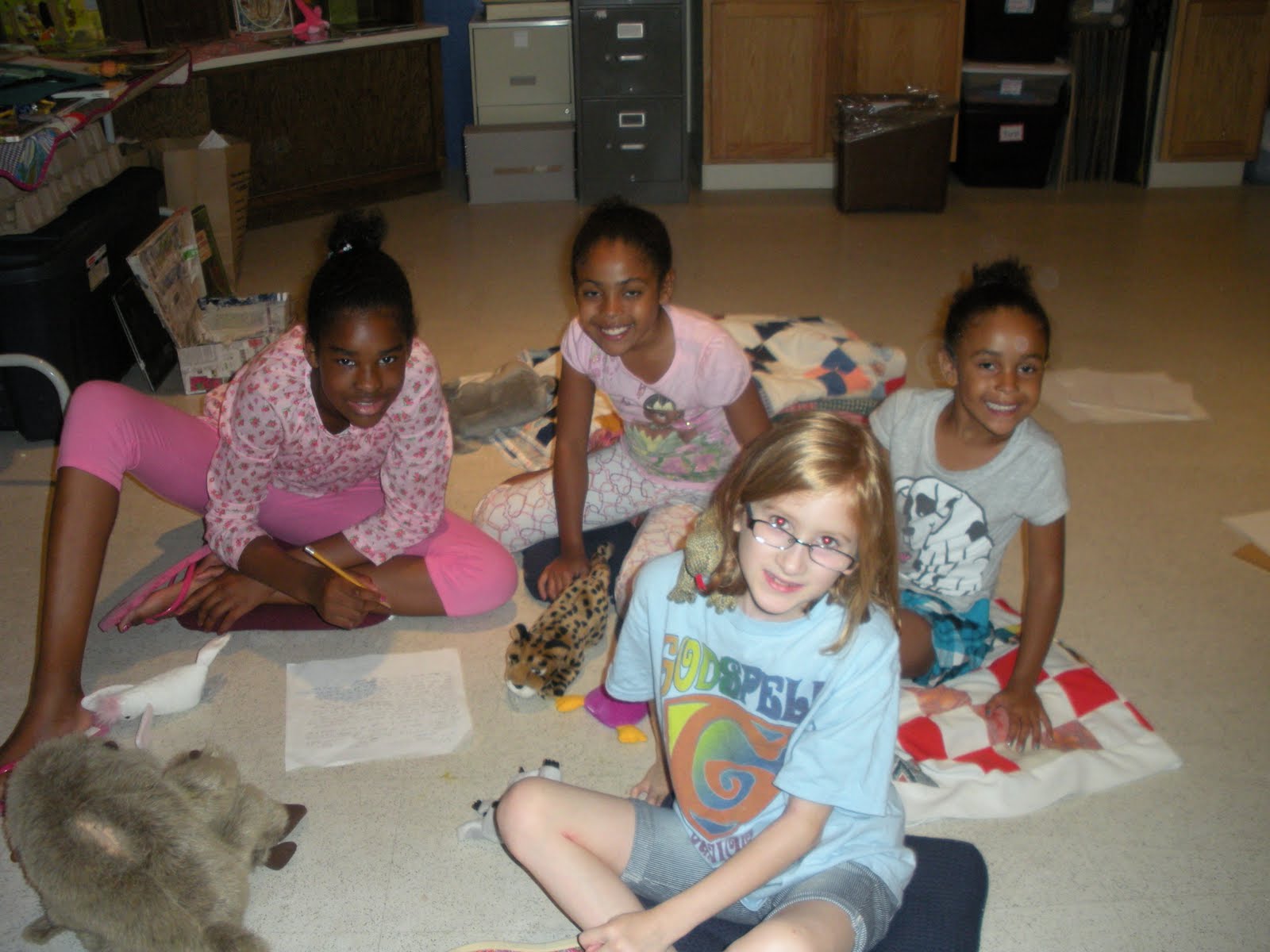
Museums are a great resource for promoting education and community development. Here at the Museum of the Great Plains, one of the ways we encourage learning and help build a sense of community is through our summer program "Footprints Through Time". Designed for children ages 6-11, this course brings together kids from around Lawton to learn about nature through art. The "Footprints" classroom is located in the museum's exhibit hall, providing a unique kid-friendly learning environment. In addition to their arts and crafts projects, kids have the opportunity to learn about southwestern Oklahoma's history through touring the museum's exhibits and exploring the museum grounds.


This past week in “Footprints Through Time”, the kids learned all about Australia. The “Footprints” instructor Faye Barnes taught the children about the unique animals in Australia, such as the kangaroo, koala bear and the duck-billed platypus. The “Footprints” curriculum
emphasizes learning by doing and the kids had plenty of opportunities to be creative and get their hands dirty. Projects included molding animals, bowls and beads out of salt dough and creating a 3-D map of Australia using cardboard, clay and paint. Each child gets to take
their creations home with them at the end of the week, once they’ve finished drying.


After a short break for a healthy snack, the kids have an opportunity to run around and work off some energy. This Friday the kids got to play with “Speed”, a new interactive exhibit here at the museum where visitors can learn about energy and motion. Guests can build and race
their own model cars, design a roller-coaster, make a movie or challenge each other on the Horsepower Bike.


To register your child for “Footprints through Time” or to learn about other summer programs and upcoming events at the Museum of the Great Plains, visit our website at museumgreatplains.org


Nena


Thursday, March 24, 2011

Nina Simom's Museum 2.0

If you're a friend of mine on Facebook then you already know how much I love Nina Simon's work. Her philosophy is new, active and connects museums to a larger audience than the ole stuffy museum mindset of the past.
Below is a letter Nina wrote in repsonse to "recent articles about museums by Arianna Huffington (on museums and new media) and Ed Rothstein (on museums and ethnic identity)."


"I have a very hard time imagining that anyone, even an incredibly knowledgeable media-maker such as Huffington, can fairly arbitrate what is and isn't the "right" kind of connection. If you gasp when you see an artifact, I snap a photo, and another visitor texts her friend about the experience, is one of us doing it wrong?" Nina Simon

Open Letter to Arianna Huffington, Edward Rothstein, and Many Other Museum Critics

Thursday, December 16, 2010

Museum of the Great Plains is on YouTube! Thanks to Cameron University Student, Chad Hearrell

Participation Starts with Staff: The Ruru Revolution

Participation Starts with Staff: The Ruru Revolution

This link was posted on Facebook by Nina Simon, author of The Participatory Museum.
And even though the Ruru Revolution engages a staff of 70 or more, I bet we could also have some fun with the idea here, with our very big staff of 12! :)

Tuesday, November 23, 2010

Tepee Construction and Design Project

Tinkering Workshop
Members of the the Oklahoma Museum Network (which thankfully, includes me) got together this week for a one day training to prepare for the tinkering exhibits which will soon be touring the state. We explored some deep and playful activities and discussed how to think about setting up a tinkering studio in a museum.

Above is a picture of Barbara Asepermy who is now helping me . Barbara and I are both amazed at the ingenuity behind tipi construction and design. Now that we are trying to figure out what sorts of materials are needed for a tipi tinkering area, we realize how much we had overlooked. For instance, do you know how many poles are needed to make a tipi or how they were placed? Where did the Indians even find such nice long, straight poles? And how many buffalo hides were needed to cover the tipi? Our questions go on and on.
http://goo.gl/photos/iJQdYKoJHd Here is a link to some photos, to see how our plans are going.

Luckily, Al Hobbs, a volunteer at our Red River Trading Post, is also providing his insight and understanding as it pertains to tipi construction, calculating the area of a circle, the relationship between the length of the poles and the diameter of the tipi, proverbs that promote the importance of a good question, tipi customs and etiquette, and the likelihood of a trial and error method of construction and design, by the first people when it comes to this very brilliant mobile home design.

Tuesday, March 16, 2010

Lawton's 2010 Big Read event continues with a special presentation by

Selby Minner & Blues on the Move

Free and open to everyone

Friday, March 19 from 6:30 till 8:30 p.m.

at the Museum of the Great Plains

601 NW Ferris Avenue Lawton Oklahoma


Spring Break

If you're looking for a fun place to be this spring break, head our way! Not only do we currently have two terrific new hands-on exhibits -the Mystery of the Mayan Medallion and 3-2-1- Blast - we will ALSO have the Science Matters Mobile Museum here on Friday! Yea!!
As far as the Mobile Museum goes, I think everyone's favorite components have been Hack the System, and the Obstacle Course. I think I have a picture of our former mayor, John Purcell trying out the Pulley Chairs which are on the outside of this huge "truck of science" and also a lot of fun!
Hope to see you soon!

Admission to go inside the Science Matters Mobile Museum? It's FREE!

For more information visit our Website.

Sunday, March 7, 2010

Museums, Social Media and PR

I wonder how many museums are currently using social media to support and promote their museum's mission and programs in our state of Oklahoma. In terms of using social media, here are a few things I learned this past Friday at a volunteer management conference in Grand Prairie Texas, from presenter Ashley Hyder, Manager, Public Relation & Communications ahyder@vcnt.org www.vcnt.org, "To Tweet or Not to Tweet":
- there are now 400 million Facebook users worldwide, and 57 million Myspace users... This website was shared at the conference.
- first and foremost LISTEN to and respond to what your followers are saying. Be authentic.
- know your goals and objectives
- plan a strategy that will work for your organization

I happened to sit next to the web designer for the Texas Volunteer Management Conference and his advice was to use social media to build visitation to our main website. Sure enough, I found more information on this idea in one of Ashley's handouts. The content is from Online Marketing Blog. Under "Have a Destination and Draw Users Back". First line reads, "Without some sort of destination to draw users back to and funnel subscribers, you'll never achieve successful web community building that is protected from the rise and fall of social networks. My destination is our museum's website, which, by the way, is being redesigned and will include a new logo! So, if I understood correctly, I should use tag words to build up our chances of being pulled up during random searches. ...which is how this tag box is used below my post. Hmm. I didn't realize its importance.

Friday, February 26, 2010

Good Info for OKMEs

Below are a few websites with information on the audiences we aim to please, as museum educators. They came up last week when we met.


http://www.imls.gov/pdf/21stCenturySkills.pdf

http://pewsocialtrends.org/pubs/751/millennials-confident-connected-open-to-change

http://www.aam-us.org/getinvolved/learn/interpretation2010.cfm

Join the OKMEs for the two-day, multi-session online conference (link above)that will provide an interactive forum for museum professionals at all levels - to explore current technology trends and practices in museum education, interpretation, exhibition, public programs, and outreach.

Last but not least is,
http://www.smithsonianeducation.org/educators/resource_library/heritage_resources.html


The Greater Southwest Chapter Monthly Meeting

The Greater Southwest Chapter
of the Oklahoma Anthropological Society
www.gscoas.org

Monthly Meeting and Program, February 27

New Traveling Exhibit Opens at MGP

http://www.sciencemuseumok.org/omn_321blast.html

The Museum of the Great Plains will open its fourth exhibit from the Oklahoma Museum Network entitled “3-2-1 Blast” on Saturday, February 27, 2010.

Wednesday, November 18, 2009

OKME Mid-Winter Meeting

February 19, 2010

Oklahoma Museum of History
2401 N. Laird Ave
Oklahoma City, OK 73105

Creative Connections in the Cultural Community: Museums and Perceived Public Value

Guest Speaker, Ruth Ann Rugg

Museum educators play an important role in community engagement. By seeking creative connections with others in the cultural community, museum educators build on positive perceptions of the museum’s public value. Collaboration is smart business—especially in an economic downturn. Beyond the immediate results, creative partnerships can also strengthen a museum’s position for future development. Hear how effective museum educators identify their assets, share resources, and contribute to a museum’s growth.

AGENDA

11:00 – 11:30 OKME Business/Welcome

11:30 – 12:30 Lunch

12:30 – 3:00 Presentation & Audience Participation


Registration is available online at https://payments.auctionpay.com/ver3/?id=W035893.

Registration fee is $25.00

You must be a member of OKME to register. Become a member today!

More about our guest speaker:

Ruth Ann McBeth Rugg began her career in the museum field in 1980 at the Kimbell Art Museum in Fort Worth Texas, as a Communications Assistant, thereby putting her double major in Journalism and English immediately to work. (Ruth Ann graduated from Texas Christian University, Fort Worth, Texas, earning a Bachelor of Arts cum laude, December 1979.) In two short years, she was promoted to a senior staff position, serving as the Assistant to the Director for Public Relations. In this capacity, Ruth Ann was responsible for a multi-faceted public relations program designed to maintain the Kimbell’s national and international image. She functioned as an institutional press agent, managed the media, positioned key spokespersons, and drafted public statements. She also researched, wrote, and distributed press information. Ruth Ann also instituted and managed the Kimbell Art Museum’s first membership program.

In 1991, Ruth Ann moved to the Amon Carter Museum, serving as the Public Relations Manager for eight years before taking the job of Program Communications Manager. In April of 2004, Ruth Ann was employed as the Acting Executive Director of The Sixth Floor Museum at Dealey Plaza, in Dallas. Serving as the chief administrator of the museum during a transition period, Ruth Ann simultaneously performed duties of Director of Interpretation and Executive Director, which entailed managing a staff of 50 in a $3.9 million operation that was fiscally self-supporting and hosted 375,000 visitors annually, including almost 60,000 school children. Prior to, and following the temporary position of Acting Executive Director for The Sixth Floor Museum, Ruth Ann served in the capacity of Director of Interpretation, with responsibility for creating and implementing the interpretive programs of The Sixth Floor Museum. Ruth Ann reported to the Executive Director and supervised six full-time staff members. She also managed activities relating to collections, exhibitions, publications, and education while representing the Museum in the national and regional professional museum community.

Well, if that isn’t enough museum work for anyone, I don’t know what is! Yet, at this time Ruth Ann stepped into the world of museum exhibit design and fabrication, working as an interpretive consultant for Museumscapes in Richardson. Ruth Ann was responsible for concept research and development, project planning, narrative arts, and interpretation for museum clients. From 2006 to 2008, she worked independently as a consultant for regional museums to facilitate strategic planning, professional development for board of directors, education, interpretation, and other projects. Somewhere in between all of this, Ruth Ann also served as part-time Director for the Texas Regional Office of Partners for Sacred Places.

Currently, Ruth Ann is the Executive Director of the Texas Association of Museums. As the chief administrator of the non-profit museum membership association with 700 members her responsibilities include executive management of the organization’s operations, educational program development, and implementation of training opportunities for museum professionals.

OKME

The Oklahoma Museum Educators (OKME) is a standing professional committee of the Oklahoma Museums Association. OKME represents the concerns and needs of museum educators within OMA by participating in policy and decision-making discussions at the statewide level and by selecting and planning programs for annual state and regional meetings. OKME promotes communication among museum educators statewide through an annual luncheon and mailings. OKME encourages high professional standards for museum educators, advocates the support of museums and their educational purpose, and promotes excellence in museum learning. OKME members share a mutual concern for museum learning, research, evaluation of programs, and/or exhibition development. OKME also has an online community.

OMA members can join OKME by paying $10 OKME membership dues. OKME dues may be mailed to OMA or you can pay online by clicking here. For more information on OKME, contact: Jana Brown, Museum of the Great Plains, 601 NW Ferris Avenue, Lawton, OK 73507, 580.581.3460, or Susan Green, Philbrook Museum of Art, 2727 S Rockford Road, Tulsa, OK 74114, 918.748.5375.


Tuesday, September 29, 2009

Photgraphs from MGP Visitors

A kind visitor shared photos from her recent visit to the Museum. She took some great pictures of the pond lilies, train, sculptures and trade post.
I didn't get her name, but here she is with Living History Interpreter Tim Poteete.
I just want to say THANKS!
Posted by Picasa

Friday, August 28, 2009

Pictures from 2007 Fall Encampment

I love going through the photos from our 2007 Fall Encampment. One reason being that that was the year I met Tonda Harrup and Patsy Harper, two living history interpreters from south Texas who just appeared that year with the "usual" south Texas bunch. They set up a beautifully furnished tipi on the grounds of the Museum, just outside the Fort. Tonda and Patsy talked about women's role in the fur trade to hundreds of Museum visitors for two full days, and then dissappeared into the sunset, just as quietly as they had appeared. I'm hoping they will come again soon!
Their personal stories of how they became interested in history can be found here.
Oh, and as far as the "usual" south Texas bunch goes...I was just kidding. We don't really have any "usuals" around here...at least not when the Fall Encampment begins! As long as these members of the American Mountain Men Association choose to be here with us, you'll not find a better presentation on the southern Plains fur trade.

Wednesday, July 22, 2009

Fall Encampment 2009

Planning Underway for the Museum of the Great Plains

Annual 1830s Fall Encampment

September 29 – October 3

10 a.m. to 5 p.m. each day

Free to Museum Members

Tim Poteete, living history interpreter for the Museum of the Great Plains, has begun planning for the Museum’s annual 1830s Fall Encampment, which is always scheduled around the first Saturday in October. As is usual, Tim begins by sending out a letter to all AMM (American Mountain Men) members who have helped in the past. The letter is written in an old style that was customary at that time among merchants, trappers and traders, though it appears to us today to be full or grammatical errors and spelling mistakes. Tim has researched many primary sources over the years to include letters and journals in order to emulate the style. Not only are the letters historically accurate and period appropriate, they’re also interesting and fun. We hope you’ll find the letter of interest too. It is attached below. (Please don’t overlook the silent auction discussion. We hope to see you there.)


Friday, July 17, 2009

Coffee's Station, on Red River

Near the Mouth of Cache Creek

In the Comanche country

To all to whom these presents shall come,

Ladies & Gentlemen, Ne'r-do-wells, & other interested parties:

I take pen in hand to Extend Greetings to one & all, hoping that good health attends you & that a Kind & Munificent Providence will shine light upon your path, & thus ease an other wise difficult passage.

To my dismay, I am only just now relaying this missive. As we have had an inordinate amount of rain at this place, no communications have been able to go or arrive, due to creeks & rivers running bank-to-bank. That, & the "electronic mail" machines at this place are as independent as a hog on ice. They do as they please, when they please. It is well said, "Technology is great. When it works."

On a related note, if all who actually receive this missive will be kind enough to pass it along to any you feel will be interested, Cols. Coffee & Colville will greatly appreciate it. I have sent it to as many as I still have addresses for. Unfortunately, there are many stalwarts of the brigade whose information I lost recently while crossing the Little Washita when we had to cut a mule loose from its pack to keep it from drowning. (We did loose another mule & a horse during that same crossing.

As many of you will recall, last fall when the Red River Brigade congregated at Coffee's Station, an impromptu silent auction was held, & the money thrown into the log-replacement pot. (To date, we have purchased $4,800 worth of logs - enough to replace the southeast & northwest walls.)

Mr. Cuz Trumble, Shiner, Republic of Tejas, has suggested we hold another silent auction at this year's gathering, using talents of RR Brigade members. Each Brigade member will make one fur trade related item and put it on the block. The auction will occur during the day Saturday (October 3), and will be open to the public. As last fall, money raised will go into the "log pot." The general public will be able to see - and buy - AMM handiwork. Hopefully, by opening it to the public, we will generate more. More money for logs, more interest in the AMM, more interest in Coffee's Station, & more interest in MGP.

On a related note, there are tentative plans for entertainment at this year's gathering, to be provided by a group of itinerant musicians billing themselves as "The Falderal String Band." Their performance is not scheduled until 6 or 7-o'-clock on the 3rd instant. As this is meant as a gesture of appreciation, we hope none take exception to the time of the performance.

Contact from Ft. Smith last spring contained price information from STL. Prime beaver were listed at $1.85/lb; otter $1.78 each; fox $1.73 each; 'cat & 'coon $1.67 ½ each, with prices expected steady or to decrease slightly as more bales were brought in. Ah, for the days of $9.00 / lb beaver! We may never see them again, I am sad to say.

As we are preparing to quit this place & return to Ft.S with this year's furs, I must now close & go help with the doctoring of one of our mules inflicted with a boil-type sore upon hiz person, as it were. Methuselah is old, steady & dependable, (would that ALL of Col C's employees were as good as him! Or as brite!!) & possessed of a sore upon his neck, which we have nearly healed up with diligent care & attention. He seems to know what we are about, & so lets us handle him with out difficulty, tho he seems to delight in playing mischif upon the un-suspecting. I will try to write again when we reach FtS, & until then wish to humbley remaine yore obeedient sarvant,

Tim Poteete

Thursday, April 9, 2009

Spring Encampment April 20 - 25


Tim Poteete, the Museum's Living History Interpreter, has spent the last two days in Wichita Falls meeting with teachers and delivering posters to all the public schools he can. He wanted to be sure everyone down that way knew about the upcoming Spring Encampment. The program would make an excellent end of the year excursion following end of the year testing. Several schools have already made reservations, but we still have room for more. We can accommodate around 100-125 students per hour, because we have several re-enactors who can each present to 25-30 students. We have excellent re-enactors. Every time I stop to think about them, I feel so completely indebted to them, with no chance in sight of ever being able to pay them back for the service they provide. They are so knowledgeable of the 1830s -1840s Southern Plains history. Our community is extremely lucky to have them.
We're also lucky to have support from the National Endowment for the Arts, the Oklahoma Arts Council, the Lawton Arts and Humanities and the City of Lawton.

Wednesday, April 1, 2009

Local Historian Wallace C. Moore, Sr.


Wallace C. Moore, Sr. was a guest speaker at the last GSCOAS meeting. He was terrific, as usual. Members and guests had a great time listening to his creative presentation on "Negro Scouts of the West". I can't wait to listen to the interview we recorded with Wallace after his presentation. It should be available soon. You can find it on the Chapter's website at www.gscoas.org