Monday, June 20, 2011

Footprints Through Time Summer Program

Hello everyone! My name is Nena Cavel and I am going to be a guest blogger here the museum's education blog. I am volunteering at the Museum of the Great Plains for the summer and will be blogging about events, summer programs and various other goings-on. Hope you enjoy!


Museums are a great resource for promoting education and community development. Here at the Museum of the Great Plains, one of the ways we encourage learning and help build a sense of community is through our summer program "Footprints Through Time". Designed for children ages 6-11, this course brings together kids from around Lawton to learn about nature through art. The "Footprints" classroom is located in the museum's exhibit hall, providing a unique kid-friendly learning environment. In addition to their arts and crafts projects, kids have the opportunity to learn about southwestern Oklahoma's history through touring the museum's exhibits and exploring the museum grounds.
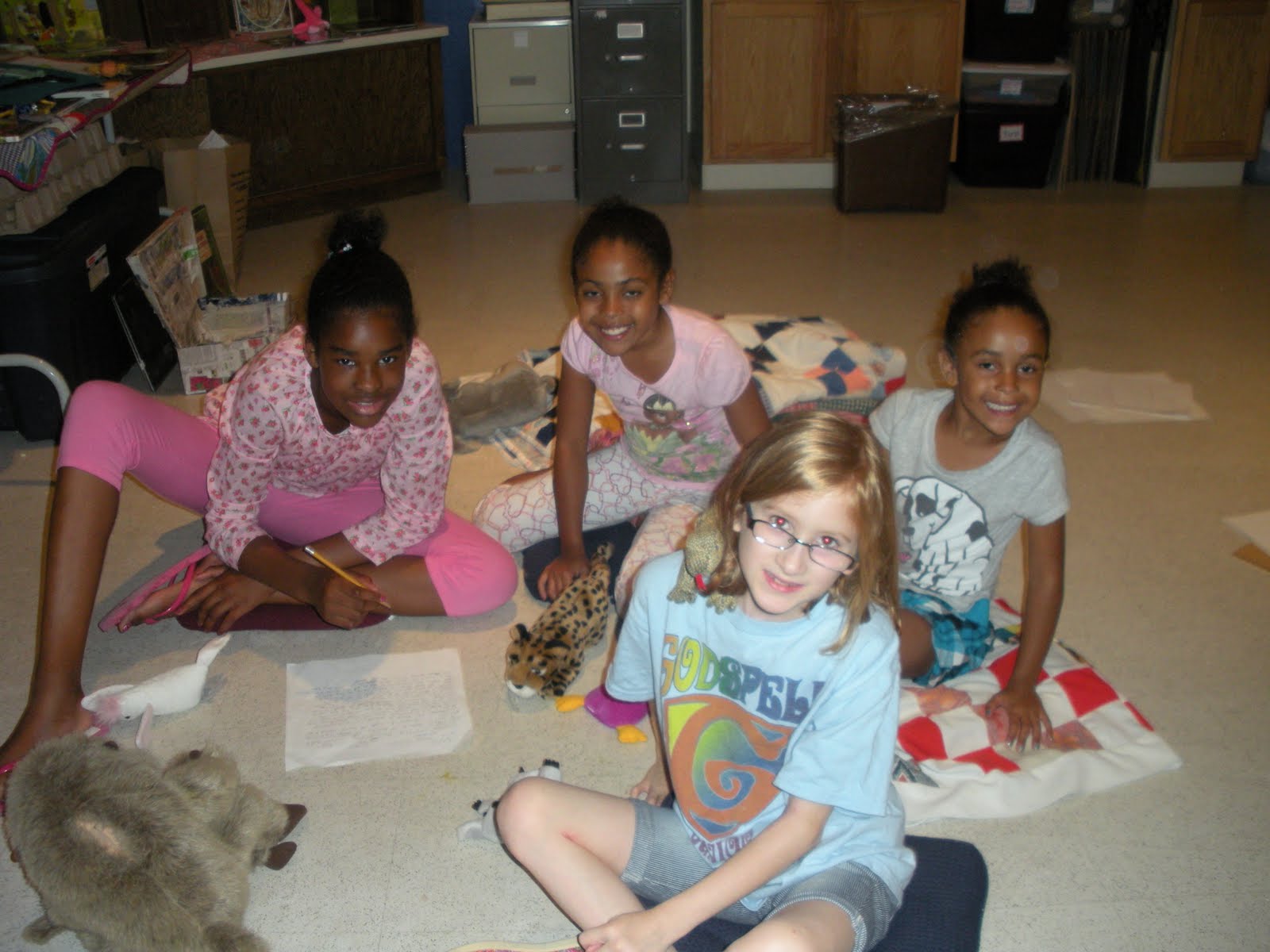


This past week in “Footprints Through Time”, the kids learned all about Australia. The “Footprints” instructor Faye Barnes taught the children about the unique animals in Australia, such as the kangaroo, koala bear and the duck-billed platypus. The “Footprints” curriculum
emphasizes learning by doing and the kids had plenty of opportunities to be creative and get their hands dirty. Projects included molding animals, bowls and beads out of salt dough and creating a 3-D map of Australia using cardboard, clay and paint. Each child gets to take
their creations home with them at the end of the week, once they’ve finished drying.


After a short break for a healthy snack, the kids have an opportunity to run around and work off some energy. This Friday the kids got to play with “Speed”, a new interactive exhibit here at the museum where visitors can learn about energy and motion. Guests can build and race
their own model cars, design a roller-coaster, make a movie or challenge each other on the Horsepower Bike.


To register your child for “Footprints through Time” or to learn about other summer programs and upcoming events at the Museum of the Great Plains, visit our website at museumgreatplains.org


Nena


Thursday, March 24, 2011

Nina Simom's Museum 2.0

If you're a friend of mine on Facebook then you already know how much I love Nina Simon's work. Her philosophy is new, active and connects museums to a larger audience than the ole stuffy museum mindset of the past.
Below is a letter Nina wrote in repsonse to "recent articles about museums by Arianna Huffington (on museums and new media) and Ed Rothstein (on museums and ethnic identity)."


"I have a very hard time imagining that anyone, even an incredibly knowledgeable media-maker such as Huffington, can fairly arbitrate what is and isn't the "right" kind of connection. If you gasp when you see an artifact, I snap a photo, and another visitor texts her friend about the experience, is one of us doing it wrong?" Nina Simon

Open Letter to Arianna Huffington, Edward Rothstein, and Many Other Museum Critics

Thursday, December 16, 2010

Museum of the Great Plains is on YouTube! Thanks to Cameron University Student, Chad Hearrell

Participation Starts with Staff: The Ruru Revolution

Participation Starts with Staff: The Ruru Revolution

This link was posted on Facebook by Nina Simon, author of The Participatory Museum.
And even though the Ruru Revolution engages a staff of 70 or more, I bet we could also have some fun with the idea here, with our very big staff of 12! :)

Tuesday, November 23, 2010

Tepee Construction and Design Project

Tinkering Workshop
Members of the the Oklahoma Museum Network (which thankfully, includes me) got together this week for a one day training to prepare for the tinkering exhibits which will soon be touring the state. We explored some deep and playful activities and discussed how to think about setting up a tinkering studio in a museum.

Above is a picture of Barbara Asepermy who is now helping me . Barbara and I are both amazed at the ingenuity behind tipi construction and design. Now that we are trying to figure out what sorts of materials are needed for a tipi tinkering area, we realize how much we had overlooked. For instance, do you know how many poles are needed to make a tipi or how they were placed? Where did the Indians even find such nice long, straight poles? And how many buffalo hides were needed to cover the tipi? Our questions go on and on.
http://goo.gl/photos/iJQdYKoJHd Here is a link to some photos, to see how our plans are going.

Luckily, Al Hobbs, a volunteer at our Red River Trading Post, is also providing his insight and understanding as it pertains to tipi construction, calculating the area of a circle, the relationship between the length of the poles and the diameter of the tipi, proverbs that promote the importance of a good question, tipi customs and etiquette, and the likelihood of a trial and error method of construction and design, by the first people when it comes to this very brilliant mobile home design.

Tuesday, March 16, 2010

Lawton's 2010 Big Read event continues with a special presentation by

Selby Minner & Blues on the Move

Free and open to everyone

Friday, March 19 from 6:30 till 8:30 p.m.

at the Museum of the Great Plains

601 NW Ferris Avenue Lawton Oklahoma